
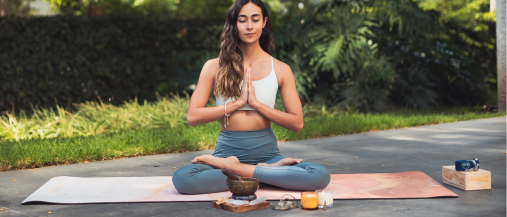
The foundation of meditation begins with awareness of the body. When we tune into the sensations we feel directly in our body, we momentarily step away from distractions and overthinking. Our body serves as an anchor, grounding us in the present moment instead of drifting off into daydreams or mental wanderings. Many of us notice, as soon as we begin meditating, just how often our minds are lost in thought!
Incorporating a body scan at the start of each meditation can be a helpful practice. No matter what type of meditation you’re doing, keeping subtle bodily sensations in the background of your awareness ensures you stay connected to the present. When you catch your mind wandering, gently return your focus to the body and your immediate experience.
Releasing tension
One of the first things you might notice when tuning into your body is the tension you hold. We often unconsciously clench or tighten certain areas – our shoulders, jaw, thighs or stomach – and aren’t even aware of it. A crucial step in building an effective meditation practice is learning to release this habitual tension.
During a body scan, pay attention to areas where you may be gripping. When you notice tension, consciously relax that area. You might imagine it softening, like a knot gently untying. Releasing this tension will help your body settle into a more relaxed and open state for meditation.
Mindfulness of breathing
After connecting with the physical sensations of the body and releasing tension, we turn to awareness of the breath. The mindfulness of breathing practice involves focusing your attention on the breath as it flows naturally in and out. This practice helps integrate your mind around a single point of focus, creating a sense of calm and mental coherence.
While our minds often feel scattered or overwhelmed, returning to the breath provides a way to cultivate a unified and centered awareness. Each inhale and exhale becomes a gentle guide, bringing us back to balance and focus.
Training the mind with patience
When starting meditation, it’s common to notice how restless and unruly the mind can be. It often feels like we have little control over where our thoughts go. This is entirely normal and a natural part of the process.
The key is to trust that with consistent practice, you can train your mind to become more focused, calm, and positive. Each time you notice your mind wandering and gently bring it back to the breath, you are building this mental discipline. Distractions will happen – this is simply the nature of the mind. What matters is not judging yourself or becoming discouraged. Meditation is a lifelong practice that deepens over time and offers transformative benefits when approached with patience and commitment.
Home practice
🧘 Practice mindfulness of breathing for 20 minutes daily
Dedicate a specific time each day for meditation. Creating a calm, quiet space in your home will support your practice. Consistency is key, so aim to make this part of your daily routine.
🧘 Maintain a meditation journal
Keep a record of your practice by journalling after each session. Note how long you meditated and a few reflections on your experience. Over time, this journal can help you identify patterns and understand the conditions that enhance your meditation practice. See our journalling guide for beginners and sign up for future posts.
By dedicating yourself to these simple practices, you’ll lay the groundwork for a meditation journey that enriches your mind, body, and overall well-being.